
It’s Valentine’s Day this week. We’ll be spending it watching Korean horror movies. Because our first date by sheer happenstance was in February, my husband and I have also been together, officially, fifteen years (married eleven).
We dated about a year before moving in together that next January, had ongoing conversations the whole time about our expectations for marriage, became “engaged” in July-ish, and were married in September of the next year.
The big reason my husband and I work so well together is that we came into everything with very similar understandings on what a committed, life-long relationship looked liked for us and the ability to communicate expectations when they didn’t align.
We both knew that we wanted the legal protections of marriage, but “being a wife/husband” are both very very low on our list of personal identifiers. Transitioning through those relationship milestones didn’t really feel like anything for us. The difference between day-to-day “girlfriend” vs “wife” duties and behaviors is minimal in an equitable cohabitating relationship.
Our marriage is also extremely easy. If I could distill all my relationship advice into one sentence it’d be:
Marriage shouldn’t be hard.
Not harder than life already is, at least. In fact, the act of being married or similarly coupled should make all that other hard stuff easier, to some degree. If it doesn’t, readjust.
And our general feelings on marriage also applied to the culture around engagement and weddings. We’re both put off by the idea of a “proposal” in terms of one member of the relationship (usually the dude) being put in the position of gatekeeper. Neither of us are really grand gesture people, either. We just had a day where we decided, for sure, yeah, let’s get married, and I ordered a ring. When it came in, we officially announced it. While it was still exciting, there was no Big Moment, just a whole bunch of smaller ones hitting their inevitable conclusion. Even the ring was more of a concession to tradition, and I really barely wore it in my day-to-day. I’m not actually sure when I wore it last after all this time.
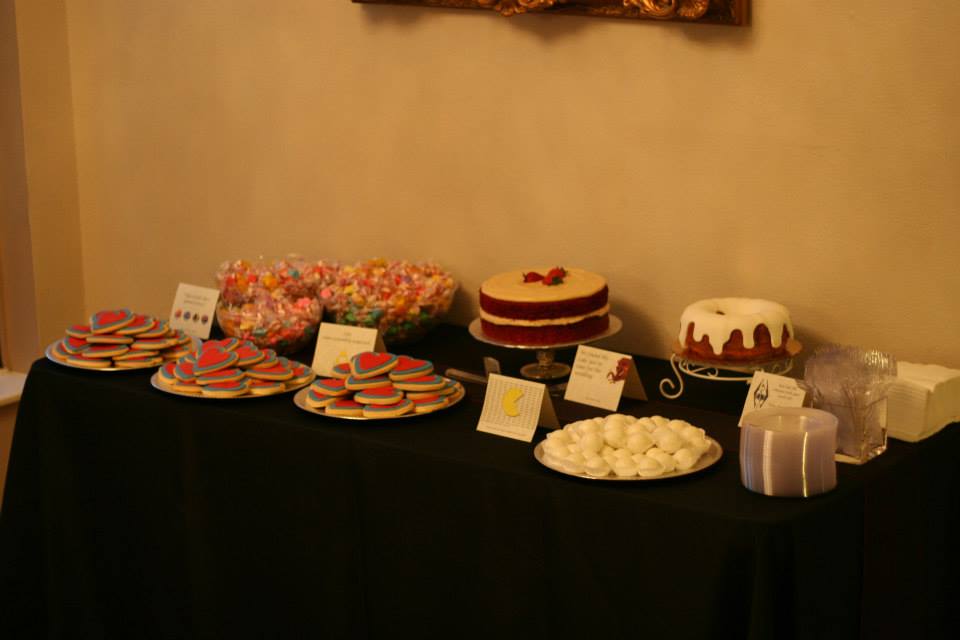
When it came to weddings, I was honestly fine with something small, maybe out on my family’s property in the country. It was my husband who wanted something a little bit bigger because he liked the idea of having a “huge party for all our friends” with “lots of excellent food.” We still kept things pretty streamlined. I was told multiple times working with vendors I was “the easiest bride they’ve ever had.” I was like, I don’t actually really want to be doing any of this, so I’m not about to make this harder on anyone, particularly myself.
And that’s not to say that the way we handled things is better or worse than anyone else. Engagement and marriage are very very personal. Rather that’s just how we did things and it worked for us. I think the key is finding that thing that works for all members of a relationship.
But the longer I’ve been married, the more removed I am from marriage/weddings as an industry, the more experience I have as a married person, the more I think “why the hell are we doing some of these things to ourselves?”
Some of it is just general relationship fuckery. I see these stories about marriage strife on things like Reddit or TikTok, and I’m like “you two need to get your shit together in whatever way that looks like for you.”
The Waiting to Wed subreddit was a recent discovery of particular interest. It’s (mostly) women talking about their multi-year long relationships with men who keep procrastinating getting married. These are women who want to be married and sometimes already have children and own houses with these men who are unwilling to match that same commitment. And it’s so frustrating to see happen. Frustration on behalf of these women but also at these women for not sticking up for their best interests or, in some cases, effectively communicating. For letting themselves fall into this trap. But mostly at all the societal puzzle pieces that created that trap to begin with.
But even when looking at relationships that make it to the marriage stage, you see some of these same underpinnings all the way back when the engagement starts and in something as simple as our relationship with rings.
Here are mine.
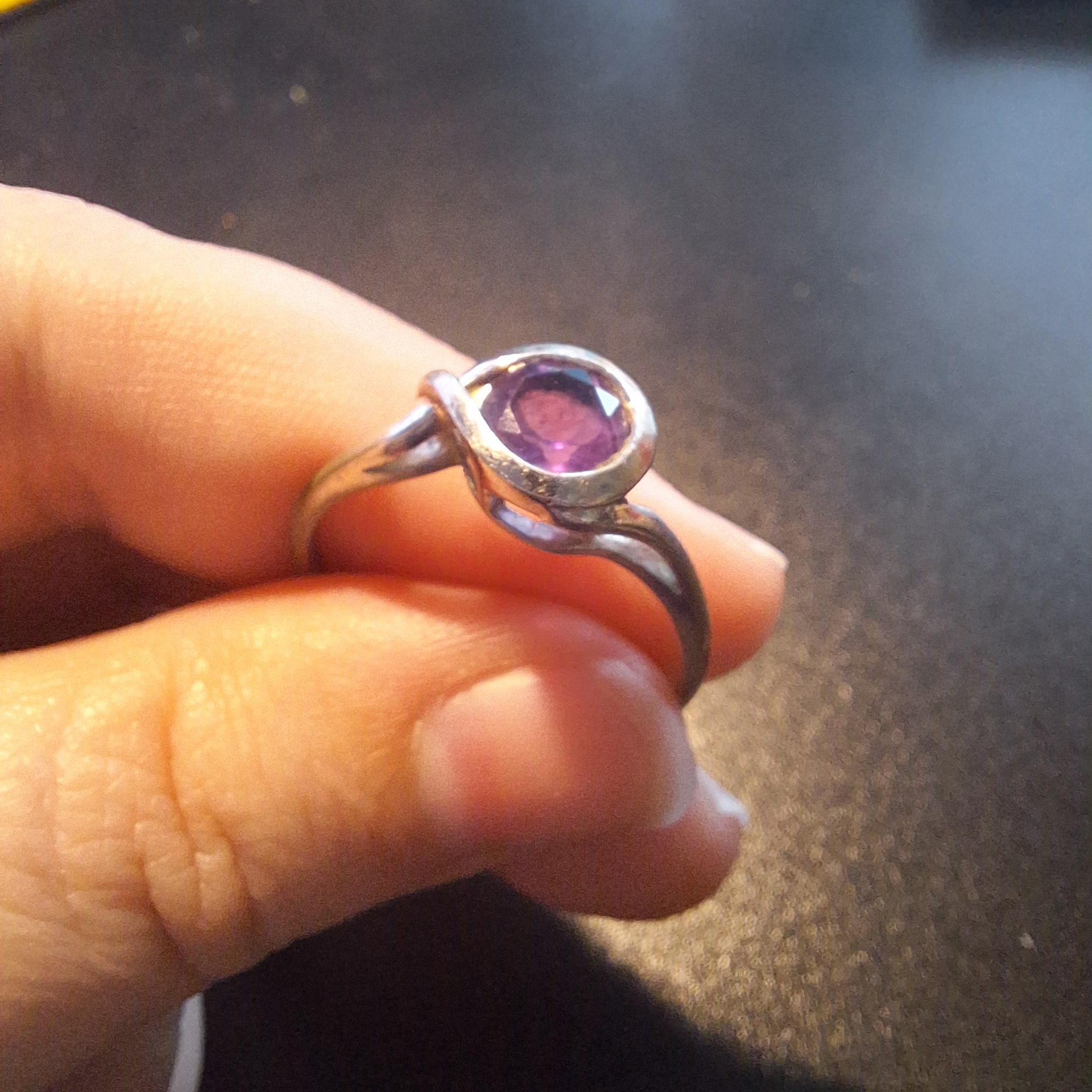
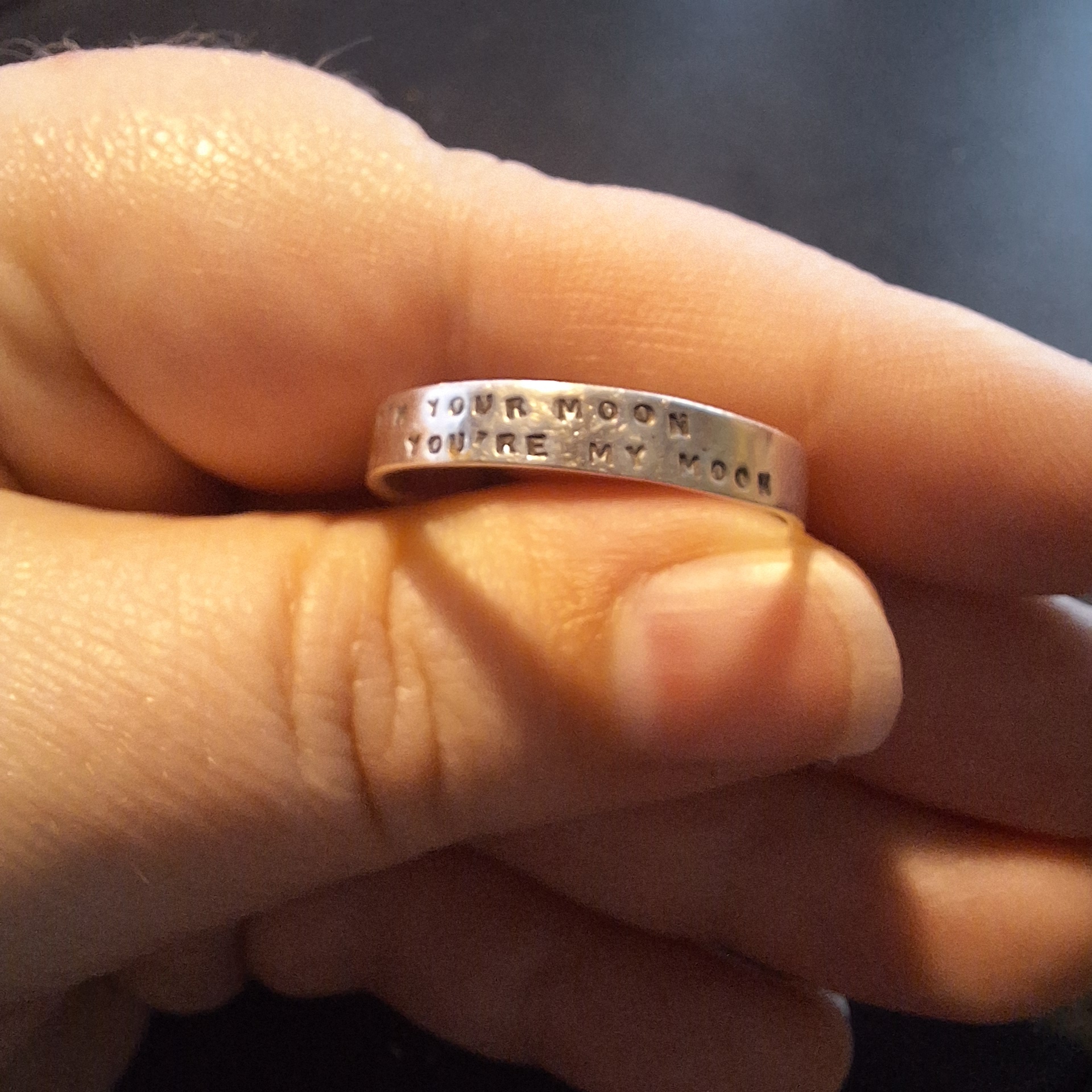
As I mentioned before, I don’t really wear my engagement ring, but I don’t typically wear my wedding band, either. I don’t like the way rings feel on my fingers. I’ve gone through a few different types, and it just doesn’t work for me. I’ve had the conversation a few times about silicon bands or wearing it as a necklace, and I just don’t really see it as a problem that needs to be solved. I have so many other concerns on a daily basis.
Despite not being a ring person, I enjoy a lot of other jewelry and make make some of my own on occasion. I’m also a rock and mineral collector. So, algorithmically, I somehow ended up being shown three different engagement ring subreddits and a few dedicated to diamonds.
If you wanted to know if the diamond industry still had a stranglehold on the engagement ring market, the answer is, “yes.”
I see a lot of pressure on the margins in these subreddits to build this sort of lifetime ring that you’re wearing every single day forever and ever until the end of time. And in some social groups, there’s a lot of weight put on the amount of money a ring is. It’s not uncommon to know a person or have heard a story about the engagement ring causing actual conflict in a couple.
The more distance you get from it, though, the more you see the ways that initial engagement process compares to the rest of the relationship. Not that it’s not something of value, but there is so much other stuff that you’re going to go through.
So on one hand, the engagement process can be a passable litmus test for conflicts you might not have considered in the relationship thus far. If one person puts a lot of value in an expensive engagement ring and the other finds that to be an extravagance, that’s something you need to resolve. Because that’s not a one-time conversation; that’s going to come up again.
On the other hand, the engagement process acts as the perfect gate for self-reflection in terms of your own expectations. For example, even after all this time together, I would never expect my husband to walk into a fine jewelry store and pick something out for me without an explicit list of requirements. He just doesn’t have a natural eye for jewelry or the technical knowledge to make the decisions I would want in an expensive jewelry purchase. Yet that is something that is expected of some young men picking out a ring for their girlfriend. And whether that’s a reasonable expectation or not is going to be highly dependent on the person and the relationship.
But also, who says you have to keep wearing your engagement ring day-to-day after the wedding? Who says you can’t change it out every five years on the anniversary of the engagement? Who says it can’t be some other manner of daily-wear jewelry? Who says you can’t use some other kind of useful object (like a jewelry box) as an engagement token? Who says you need a token at all?
What’s actually important to you and adds value to your life and relationship?
Because let’s look at the current culture of engagement rings in the United States.
We have this ring that’s supposed to be this deep symbol of love. This forever jewelry that’s emblematic of this life commitment you’ve made.
Hope Zales takes walk-ins! Let me just pick up a diamond ring like pretty much everyone else. But if my diamond is too big and I don’t look like I have Big Diamond money, everyone’s gonna know it’s lab grown and not mined (possibly by children in a warzone) and that’s, like, a problem somehow.
If you genuinely like diamonds and seek out conflict-free gemstones, go for it. Diamonds are perfectly lovely and extremely durable. Agnosic of all the ethical problems, they’re not a bad choice. But the diamond as the gemstone du jour for modern engagement rings isn’t part of a storied, immutable tradition. It’s mostly the legacy of mid-20th century marketing from DeBeers.
If you’re American, in particular, you have been conditioned to associate diamonds with engagement rings because of advertising. The “remember! you can use any gemstone” subculture around engagement rings only exists as an “alternative” because of the effects of marketing establishing an arbitrary norm.
All these things are part of the of the American marriage. If you don’t spend some time on deconstruction and examine your expectations around marriage, you’re going to fall pray to social agendas. And social agendas exist to benefit someone or something, and that something might not be you.
So you have to ask yourself if you’re building your relationship im such a way, that you both see equitable profit, whatever that looks like for you.

 Pixels and Pins Studio